How to properly apply and use mineral sunscreen

A mineral sunscreen provides excellent protection when applied correctly. It works by forming a film on the surface of the skin—unlike a fluid sunscreen that penetrates. The ARDESUN SPF 50 formula is anhydrous, with non-nano zinc oxide: a richer texture that simply requires a suitable application technique.

Here is the complete user manual for using it outdoors: while hiking, at the beach, canoeing, in the garden, cycling, or on vacation with children.

Woman applying SPF 50 sunscreen to a child's back near a swimming pool, sun protection for face and body on vacation

What to understand before applying

The indicated SPF corresponds to generous and even application. In practice, too little is often applied, especially with mineral textures, to avoid a rich finish or a slight white cast — this is precisely the mistake to avoid: too thin a layer protects much less effectively.

The application is easier on well-hydrated skin: on dry, tight skin, the product doesn't grip as well. At ARDESUN, natural oxides provide a flesh-toned hue that helps minimize the white cast, provided you take a few seconds to work the texture in well.

01

Dry skin

On wet, sandy, or very sweaty skin, the film will be less even.

02

Small touches

Apply in areas: forehead, cheeks, nose, neck, shoulders, arms, legs.

03

Zone by zone

It's better to move forward gradually than to put a large amount in one place.

04

A few seconds

The anhydrous base softens with skin heat: no need to force.

05

Do not rub

The goal is a protective film on the surface, not a cream that penetrates like a treatment.

06

Check

Ears, nape of the neck, shoulders, hands, tops of the feet: a final mental check for anything missed.

07

Let rest

Two to three minutes before getting dressed, especially with light-colored or tight-fitting clothing.

How much sunscreen should you apply?

You need to use more than a moisturizer. For the face and neck, start with a good dollop – the equivalent of two fingers' worth of cream applied in several touches. For the body, be generous: arms, shoulders, legs, nape of the neck, backs of hands, and tops of feet each require a substantial amount of product.

The pitfall with mineral sunscreens is underdosing to achieve a more matte or invisible finish. This is understandable, but it reduces protection. The right approach is rather to apply enough, then spread it well.

In case of heavy exposure, it's better to have enough product in your bag. A 60 ml bottle is practical and portable, but it's not designed to protect an entire family for a full week at the beach.

Good practices by area

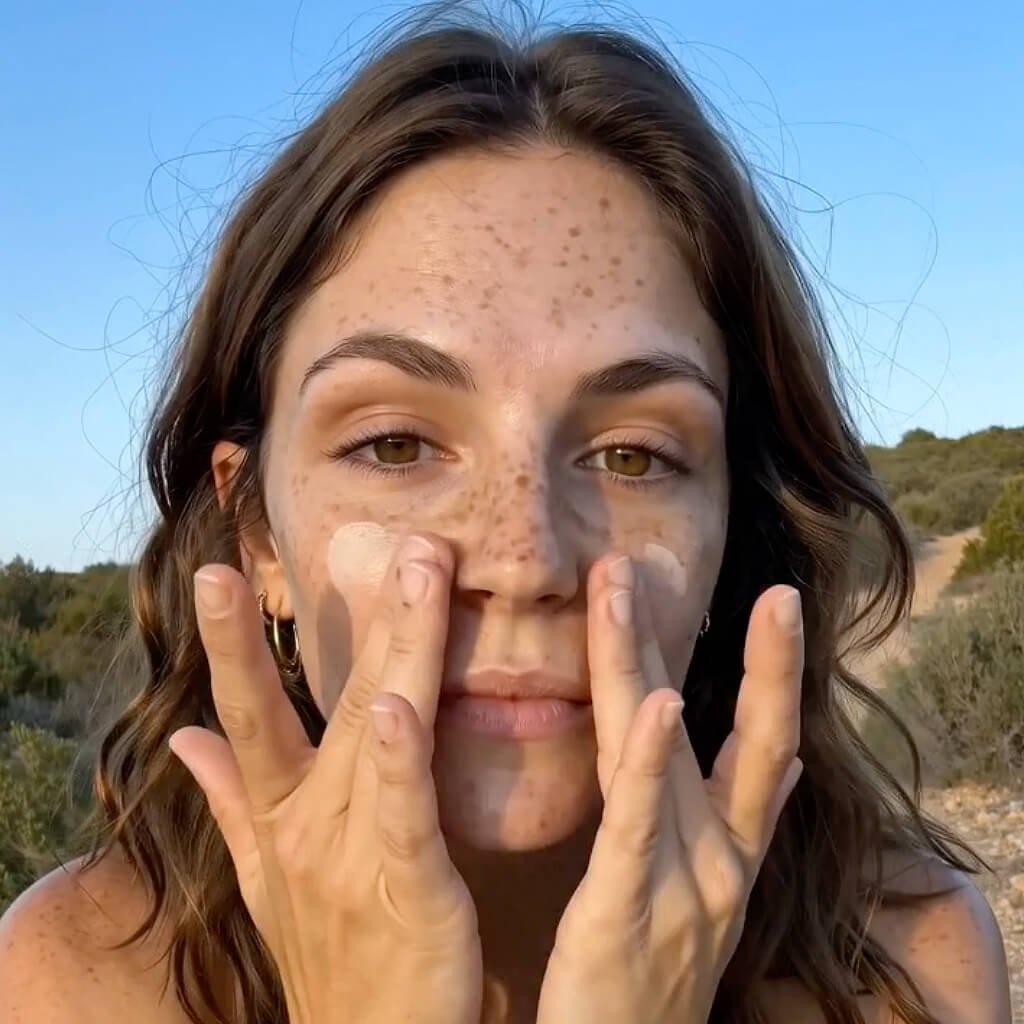
On the face, the order of application matters: sunscreen is applied last, after your morning moisturizer and before makeup. Apply in small dabs: forehead, cheekbones, nose, chin, and the upper neck. Avoid the immediate eye area, lips, and mucous membranes.

On the body, start with the most exposed areas: shoulders, arms, upper back, legs, tops of feet. When hiking or cycling, think about areas of friction: backpack straps, sleeves, shorts, socks, towel.

For children, the application must be done by an adult. Sunscreen remains a supplement: covering clothing, a hat, sunglasses, and shade remain priorities, especially for babies and young children, who should not be exposed directly to the sun.

Application of ARDESUN Mineral Sunscreen SPF 50 on the face
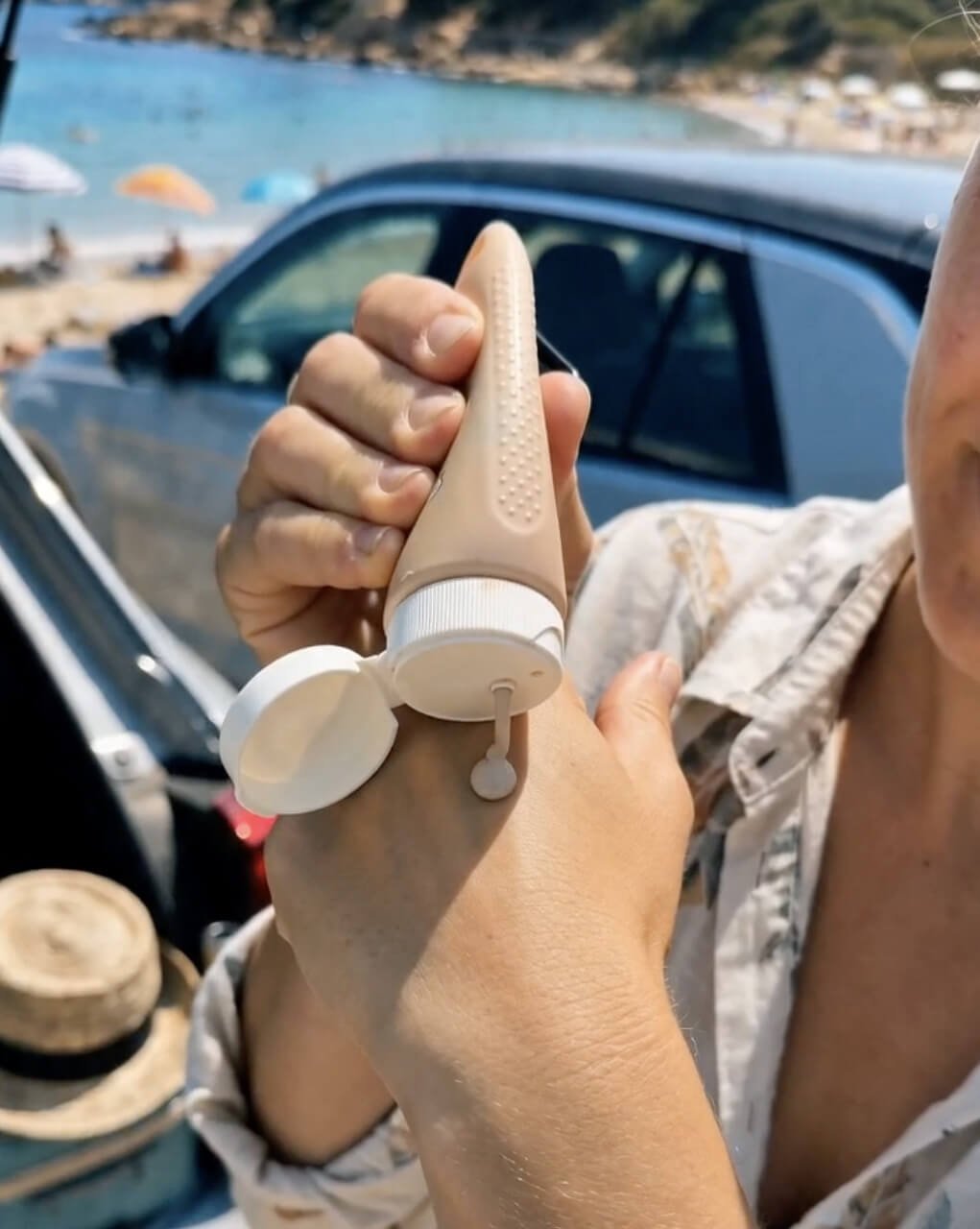
Applying SPF 50 mineral sunscreen to arm near the beach

The areas we too often forget

Most sunburns happen on obvious areas, but are forgotten during application:

  • top and back of the ears
  • Neck and upper back
  • nostrils and cheekbones
  • Shoulders and clavicles
  • Two hands
  • backs of knees
  • top of feet in sandals
  • areas exposed after garment movement: strap, sleeve, shorts, swimsuit

By the river, on the beach, or in the mountains, water, sand, stone, and altitude increase exposure.

Sunscreen isn't applied just once

The application must be renewed at least every two hours with prolonged exposure, and systematically after swimming, heavy sweating, or towel drying. The mention «water-resistant» generally corresponds to a 40-minute swimming test – beyond that, reapply.

The water-resistant label does not mean that the protection remains intact after swimming. Water, friction, and towels remove part of the protective film. After a bath, dry your skin and then reapply.

Renew every two hours in prolonged exposure.
Reapply systematically after bathing.
Dry the skin before reapplying a diaper.
With mosquito repellent: sunscreen first, repellent second, once the film has set.
Never leave the bottle in direct sunlight or a hot car.

Common mistakes to avoid

Too little product

Applying too little to avoid a rich finish is the most common mistake.

Rub to the end

Completely removing the film means removing a part of the protection.

Wet or sandy skin

On wet, sandy, or already very sweaty skin, the film will be uneven.

Forgotten Zones

Ears, nape of the neck, backs of hands, tops of feet: oversights happen quickly.

No renewal

Not reapplying after swimming or toweling leaves the skin exposed without real protection.

Bottle in the sun

Leaving the bottle in direct sunlight or a hot car degrades UV filters.

Extend exposure

Sunscreen is not meant for staying in the sun longer than you should.

How to properly spread an anhydrous texture

The ARDESUN texture is anhydrous. Therefore, it may feel richer on first contact than a very fluid sunscreen. To apply it easily, avoid the «large dab in the middle then rapid spreading» motion.

The right method: apply several small dots, spread gradually, then smooth. The texture becomes more supple with body heat. The natural oxides give a flesh-toned hue that helps blend the finish after spreading, instead of leaving a noticeable white cast.

After application, leave it on for a few minutes before putting on light-colored clothing, a backpack, or a towel on your skin. This improves comfort and limits transfer.

Why didn't ARDESUN choose a sunscreen stick?

The stick is a very good format for certain uses, especially when the application needs to be targeted—that's why we chose it for our mosquito repellent. For a face and body sunscreen, the logic is different.

Effective sun protection requires generous and even application. With a stick, it's easier to under-apply, miss spots, or forget areas. On legs, arms, shoulders, or the back, application quickly becomes less regular.

The 60 ml bottle with carabiner allows for a travel-friendly size while dispensing a good amount of cream and allowing for proper application.

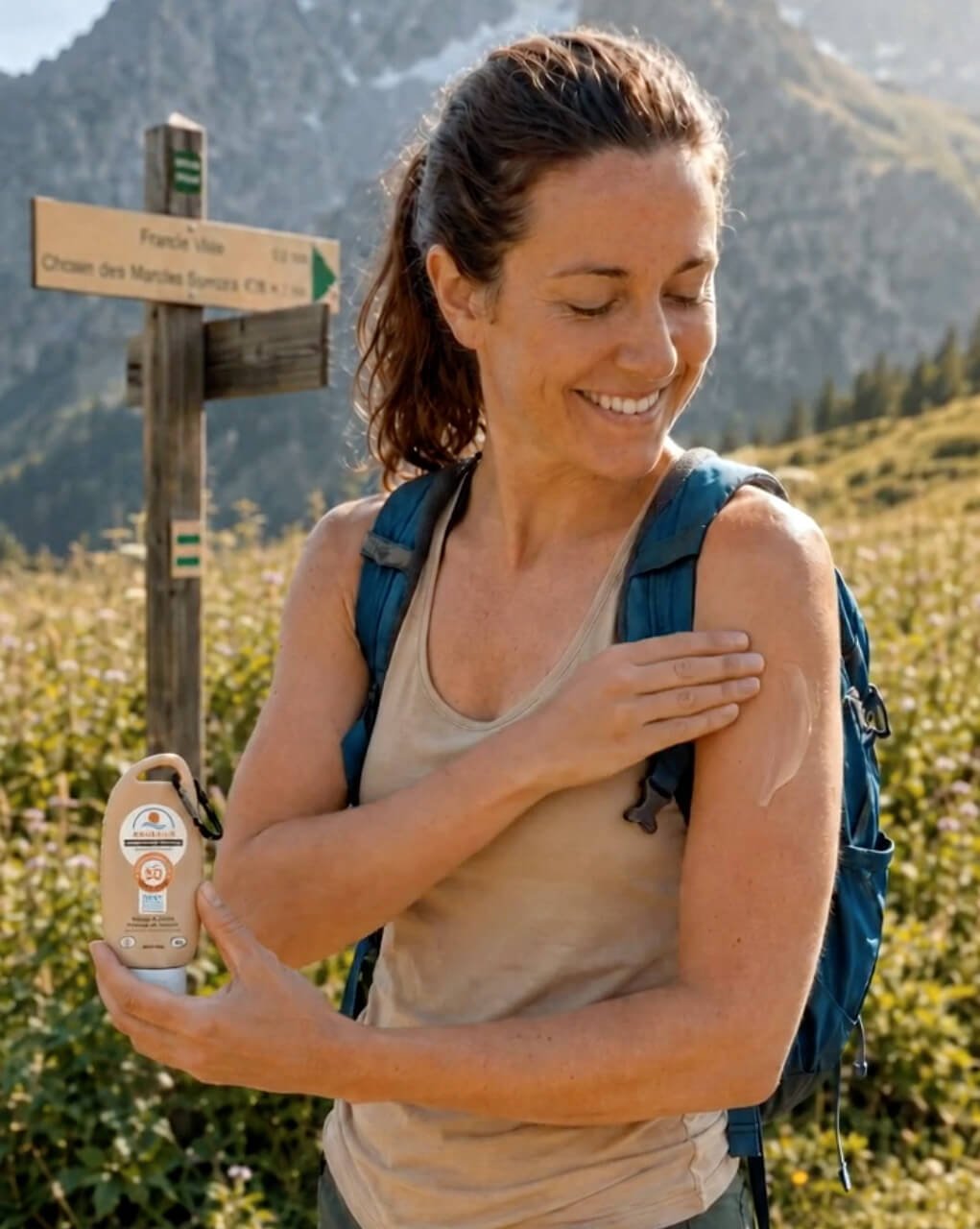
Woman applying mineral sunscreen SPF 50 to her shoulder while hiking

ARDESUN Mineral Choice

ARDESUN has chosen non-nano zinc oxide, without organic UV filters. This choice isn't just about texture or certification: some organic UV filters, like octocrylene, oxybenzone, or octinoxate, are currently under discussion or identified by organizations like ANSES and NOAA for their impact on aquatic environments and corals.

No sunscreen can be presented as completely environmentally neutral. However, the ARDESUN formula aligns with the criteria generally sought in serious «reef safe» approaches: mineral filter, non-nano zinc oxide, absence of oxybenzone, octinoxate, octocrylene, and controversial organic UV filters.

This is an important point, but it doesn't replace good practice: apply before going into the water, let the film set, avoid slathering it on right before diving in, and wear UV-protective clothing when possible.

Frequently Asked Questions About Using Mineral Sunscreen

Should mineral sunscreen be applied before or during sun exposure?

Before exposure. Time must be allowed to create a regular film on the skin. Then, the application is renewed regularly throughout the day.

Does ARDESUN cream leave a white cast?

The formula was developed to limit this effect. The natural oxides provide a flesh-toned hue that helps make the finish more discreet after application.

Can it be used on the face?

Yes, the cream is designed for both face and body. Simply avoid the immediate eye area, lips, and mucous membranes.

Should I reapply after swimming?

Yes. After swimming, sweating, or towel-drying, reapply to dry skin to reform a homogeneous protective film.

Should I reapply if I'm just sweating, without swimming?

Yes, if sweating is pronounced. Dab the skin with a clean cloth rather than rubbing it, then reapply a thin layer to the affected areas.

Can I apply makeup over it once the cream is on?

Yes, once the film has set (two to three minutes after application). Apply makeup in dabbing motions rather than rubbing, to avoid disturbing the protective film.

How to reapply makeup when wearing makeup

No need to remove everything. Gently dab an extra thin layer onto the most exposed areas (nose, cheekbones, forehead) without rubbing.

Can it be used with mosquito repellent?

Yes. First apply sunscreen, let it set, then apply repellent to the necessary areas.

How long does it keep after opening?

The period after opening (PAO) for ARDESUN sunscreen is 11 months. Store the bottle away from excessive heat.

Sources & Precautions

Sunscreen is a supplementary protective product. It does not replace shade, protective clothing, sunglasses, a hat, or avoiding the most exposed hours. An insufficient amount significantly reduces the level of protection.

Discover ARDESUN mineral sunscreen

Shipping costs OFFERS from any order of €35 including tax in metropolitan France